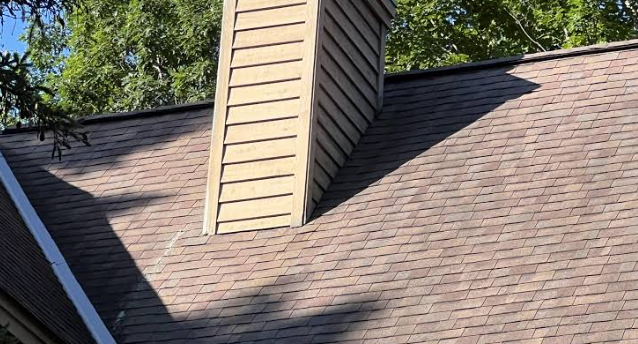
The house is twelve years old, sitting in a Lakewood Ranch subdivision where roughly four hundred roofs went up inside the same eighteen months. Nobody has been on top of this one since the builder’s crew climbed down and drove away. The only opinion the owner has ever received about it arrived over the fence, from a neighbor holding a replacement quote and announcing that the whole street is due.
A quote is not a diagnosis. Twelve years of Gulf Coast sun, wind-driven rain and afternoon storms leave evidence on a roof, and that evidence is either written down somewhere with dates and photographs or it is not. Booking a documented inspection with a local roofer lakewood ranch fl homeowners can reach by phone turns the neighbor’s guess into a record you own. That is the argument here: one scheduled afternoon a year, documented, tells you more about your roof than any conversation held across a property line, and it costs a fraction of what acting on rumor costs.
An Inspection Follows A Fixed Route Every Time
A real inspection is not a walk around the yard with a phone camera. It runs the same route every visit, which is why it works as a record: the same items get looked at in the same order, so this year’s photographs can be laid beside next year’s. The route starts on the exterior surfaces, tile or shingle, checking for cracked, lifted or missing pieces. Then the transition points, valleys and flashing, where two planes meet and leaks most often start. Then the penetrations, meaning pipe boots, vents and skylights, anything that punches through the deck and depends on a seal that ages faster than the roof around it.
Inside, the attic gets a look for ventilation, for daylight where there should be none, and for staining on the underside of the deck. What usually turns up on a twelve-year-old house here is not a failed roof at all. It is one cracked boot over a bathroom vent, a run of sealant gone chalky, and a valley holding a mat of oak debris that keeps the surface wet for two days after every storm. None of those are emergencies. All three are cheap in March and expensive in September.
The output matters as much as the climb. A photo report with dated images of each finding is the thing a homeowner can hand to an insurer, to a buyer, or to the next contractor who announces the whole roof is shot. File it with the closing documents and the water heater receipt. Twelve years from now, that folder is the difference between an argument and a record.
See also: Old Plaster Walls Decide Which Cooling System You Can Install
Storm Seasons Set The Inspection Calendar
Timing is the part most owners get backwards, calling only after something drips onto the kitchen ceiling. Hurricane season runs June through November, so the two useful windows are spring, before the weather arrives, and late fall, after it leaves. If your roof is under ten years old and has never taken a named storm, one look each spring is enough. If it is past ten, or a storm tracked directly over the subdivision, add the post-season check and stop debating it.
Season counts swing hard, and a quiet year is not a pass. The 2020 season produced thirty named storms across the Atlantic basin; 2025 produced thirteen. A homeowner who skipped inspections through the calmer stretch is not ahead, because the sun does not take a season off, and the daily heat cycling that works sealant loose runs whether anything is spinning offshore or not. Anyone shopping for a local roofer lakewood ranch fl neighbors already vouch for should be making that call in April rather than in the week after a storm, when everyone on the street is calling at once.
The weeks after a scheduled visit are quieter than people expect. The inspection itself takes an hour to ninety minutes on a house this size, and the photo report typically lands within the first week. Small corrections, a boot replaced, a valley cleared, sealant redone, usually get scheduled and finished within 10 days, because none of it requires materials anyone has to order. Nothing else gets sold to you in the first month, because on most of these houses there is nothing else to sell. By month three you have forgotten about the roof entirely, which is the point, and a year later the next visit opens the same folder and compares the same photographs, so any change shows up as a change instead of as a stain on the ceiling.
One Afternoon A Year Buys Real Answers
Budget an afternoon and a small repair allowance rather than a replacement fund. Say a couple of hundred dollars a year covers the minor corrections a documented visit turns up on a house at this age. Call it $250. Closer to $400, honestly, in a year where a skylight seal and two pipe boots all come due at once, and that is still nowhere near the number written on the neighbor’s quote.
There is an insurance side to this that homeowners underrate. Verisk’s quarterly property report, which counts claims filed from January 2026 onward, found that water damage comprised 31.1% of all U.S. property claims in Q1 2026, the largest single loss category of the quarter. A fair share of that water starts at a roof penetration nobody had looked at in years. Adjusters ask when the roof was last inspected, and they ask early. A dated photo report answers that in seconds; memory does not.
Twelve years is a long time to know nothing about the one component holding the weather out of a house. The fix is not dramatic: a scheduled afternoon, a fixed route, a photo report filed where it can be found again, repeated each spring. The neighbor may well be right that some roofs on the street are due. Yours is either one of them or it is not, and after the first documented visit you are the one who knows which.