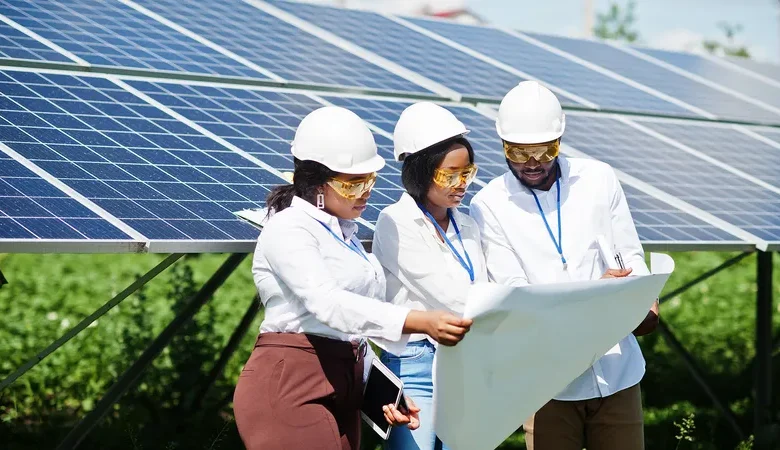
Families today face rising utility bills, fluctuating energy prices, and concerns about the long-term reliability of traditional power sources. These challenges often make households feel dependent on external providers, with little control over their own expenses and energy security. Solar power offers a solution by allowing families to generate electricity directly from the sun, reducing reliance on utility companies and creating a greater sense of independence. By producing clean energy at home, families can stabilize their costs, protect themselves from unpredictable rate increases, and contribute to a more sustainable future. The ability to control energy generation empowers households to make choices that fit their needs, creating both financial and environmental benefits simultaneously. As solar technology becomes more accessible, more families are discovering that it is not just about saving money but about taking ownership of their energy future.
Taking control of household energy
Reducing dependence on the grid
One of the most significant ways solar power helps families achieve energy independence is by reducing their reliance on the electrical grid. Traditional power systems often leave households vulnerable to outages, fuel shortages, and price spikes that are outside of their control. Solar panels installed at home provide a direct source of power, which can be used to run appliances, charge devices, and maintain essential functions. When paired with battery storage, solar systems enable families to store excess energy generated during the day and utilize it at night or during power outages, thereby creating true resilience. This ability to maintain power without entirely depending on the grid offers peace of mind and financial security. Companies like North Valley Solar Power near Tracy have demonstrated how residential solar systems can be tailored to meet individual household needs, ensuring consistent energy production even when external conditions change. By generating their own power, families gain freedom from the unpredictability of utility companies.
See also: How Guardian Foundation Repair Uses Advanced Technology for Accurate Solutions?
Stabilizing long-term household costs
Beyond providing independence from grid fluctuations, solar energy offers families greater control over their long-term finances. Utility bills often rise unpredictably due to fuel costs, infrastructure updates, or seasonal demand, making budgeting difficult for households. Solar panels offer a way to secure predictable energy savings, as families generate their own electricity rather than relying solely on utility providers. Once the system is installed, the monthly costs decrease significantly, and over time, the savings often exceed the initial investment. This financial stability enables families to allocate resources toward other essential needs, such as education, healthcare, or home improvements. Knowing that energy bills will remain consistent also reduces stress and facilitates more effective household planning. The long-term economic benefit is clear: solar power not only reduces expenses but also protects families from ongoing utility increases, ensuring greater financial independence for years to come.
Increasing resilience during outages
Energy independence is not just about lowering costs; it is also about ensuring security during times of emergency. Families that rely entirely on the grid often face disruptions during storms, heatwaves, or unexpected failures in infrastructure. Solar power systems, especially those with storage solutions, allow households to maintain electricity during these critical times. Battery backups ensure that essential systems, such as lighting, refrigeration, medical devices, and communication networks, remain operational when the grid goes down. This reliability is particularly valuable for families with young children or elderly members who depend on consistent energy. By generating and storing their own electricity, households reduce the risks associated with outages and gain a sense of preparedness. This resilience strengthens the overall independence of the family, making them less vulnerable to challenges that can disrupt daily life. Solar energy, therefore, not only lowers bills but also safeguards well-being when traditional systems fail.
Contributing to sustainable communities
While solar power directly benefits families, it also plays a vital role in creating stronger, more sustainable communities. As more households adopt solar energy, the demand on the central grid decreases, reducing strain and lowering the risk of widespread outages. This collective adoption promotes stability for entire neighborhoods while encouraging cleaner energy practices. Families who invest in solar also contribute to broader environmental goals by reducing carbon emissions and limiting reliance on fossil fuels. This responsibility creates a ripple effect, inspiring others to consider renewable solutions and strengthening community-wide energy independence. As more families participate, the overall cost of solar technology decreases, making it more accessible to others. In this way, individual households contribute to a larger movement that improves quality of life, strengthens resilience, and ensures that future generations inherit a cleaner, more stable energy system. Solar power, therefore, represents both personal independence and collective progress.
Solar power empowers families to take control of their energy use, lowering costs, enhancing resilience, and reducing their dependence on external providers. By generating their own electricity, households gain freedom from unpredictable utility rates while creating financial stability that lasts for decades. The added security of battery storage ensures that families remain protected during outages, providing peace of mind in times of uncertainty. At the same time, solar adoption contributes to stronger communities by reducing strain on the grid and supporting environmental goals. For families seeking independence, security, and sustainability, solar energy is a powerful solution that continues to grow in accessibility and value. It represents more than just a financial decision—it is a step toward actual ownership of household energy. By embracing solar, families are investing in a future where they control their own resources and enjoy the confidence that comes with energy independence.